The information in this article is for educational purposes only and does not constitute medical advice. Always consult your child’s doctor before making any health decisions. If your child is having a medical emergency, difficulty breathing, a seizure lasting more than 5 minutes, unresponsiveness, call 911 immediately.
A concussion is a type of mild traumatic brain injury. It happens when a blow or jolt to the head, or a hit to the body that shakes the head, disrupts how the brain works. Importantly, a concussion is a *functional* injury: it changes how the brain operates, not how it looks. That's why CT scans and MRIs usually come back normal even when a teen is clearly struggling with headaches, fogginess, or mood changes.
For adolescents, this deserves careful attention. Their brains are still developing, building the connections that support learning, emotional regulation, and decision-making. An injury during these years can temporarily interfere with school, sports, and friendships at the very moment those things matter most. Youth concussion is also more common, and more underestimated, than many families realize, particularly in contact and collision sports like football, soccer, hockey, and lacrosse. Symptoms can be subtle, and teens often underreport them to stay in the game.
In this article, Dr. Shawn Sedgh, MD walks through the basics of recovery: what rest actually means in the first days after injury, how to approach a gradual return to school, and what a stepwise return to sport involves. What you won't find here is a rigid, day-by-day schedule, recovery timelines vary, and your child's care team should shape the plan around their symptoms, age, and medical history. Our goal is to give you a clear framework so you can ask the right questions and support your teen with confidence.
How recovery works: brief rest, then gradual symptom-guided activity
When a child or teen sustains a concussion on the field, the old instinct was to send them to a dark room and keep them there until every symptom disappeared. We now know that approach can backfire. Current guidance, as Dr. Shawn Sedgh, MD explains to families, calls for about 24 to 48 hours of relative rest right after the injury, quiet activity, lighter screen time, no sports, followed by a gradual return to normal life as symptoms allow.
Why move away from strict rest? Prolonged isolation in a dark room can actually slow recovery. It tends to increase anxiety, disrupt sleep, and leave kids feeling worse, not better. Short rest helps the brain settle in the first day or two; after that, gentle stimulation appears to support healing rather than threaten it.
So what does "gradual" look like? Light daily activity comes first: short walks, easy chores, time with family. School usually returns before sports, sometimes with temporary adjustments like shorter days or extra breaks. Return to play happens last, step by step, and only once a young athlete can handle school and everyday activity without symptoms flaring. Each step forward should be guided by how your child feels, not by a calendar.
One honest note for parents: no fixed timeline applies to any individual concussion. Many teens recover within a few weeks, while others need longer. A youth concussion deserves patience, follow-up with your child's clinician, and a plan adjusted as symptoms change, not a rigid schedule printed from the internet.
*This article is for general education and does not replace individualized medical advice.*
Return to school first: academic adjustments that support recovery
After a concussion, many parents focus on the sport. But for most adolescents, school comes back first, and it should. Thinking and learning use the brain constantly, so easing back into academics tells you a lot about how recovery is going before anyone considers the field.
In the early days, a short period of relative rest is reasonable. After that, gentle activity, including light schoolwork, tends to help more than total shutdown. The goal isn't perfect performance. It's participation that doesn't push symptoms up.
Common accommodations are simple and temporary: shorter school days or a late start, reduced screen time, scheduled rest breaks in a quiet room, extra time on assignments, and a brief exemption from tests or heavy homework loads. Some students also benefit from pre-printed notes so they aren't straining to copy from a board.
None of this works in isolation. Parents, the student, teachers, and the school nurse or counselor should talk early and often. As symptoms settle, the load steps back up, a longer day, then full days, then regular homework, then testing. If symptoms flare with a change, it's fine to hold steady or step back briefly rather than pushing through.
You'll know full academic participation is being tolerated when your teen can manage a complete school day and homework without headaches, dizziness, fogginess, or unusual fatigue, and can concentrate the way they did before the injury. Reaching that point comfortably is generally a sign they're ready to think about the next step: a gradual return to physical activity.
For families navigating a youth concussion, Dr. Shawn Sedgh, MD emphasizes that recovery timelines vary and school adjustments should follow the individual student's symptoms, not a fixed calendar. Check in with your clinician if progress stalls or symptoms worsen.
Return to play: a stepwise, graded progression back to sport
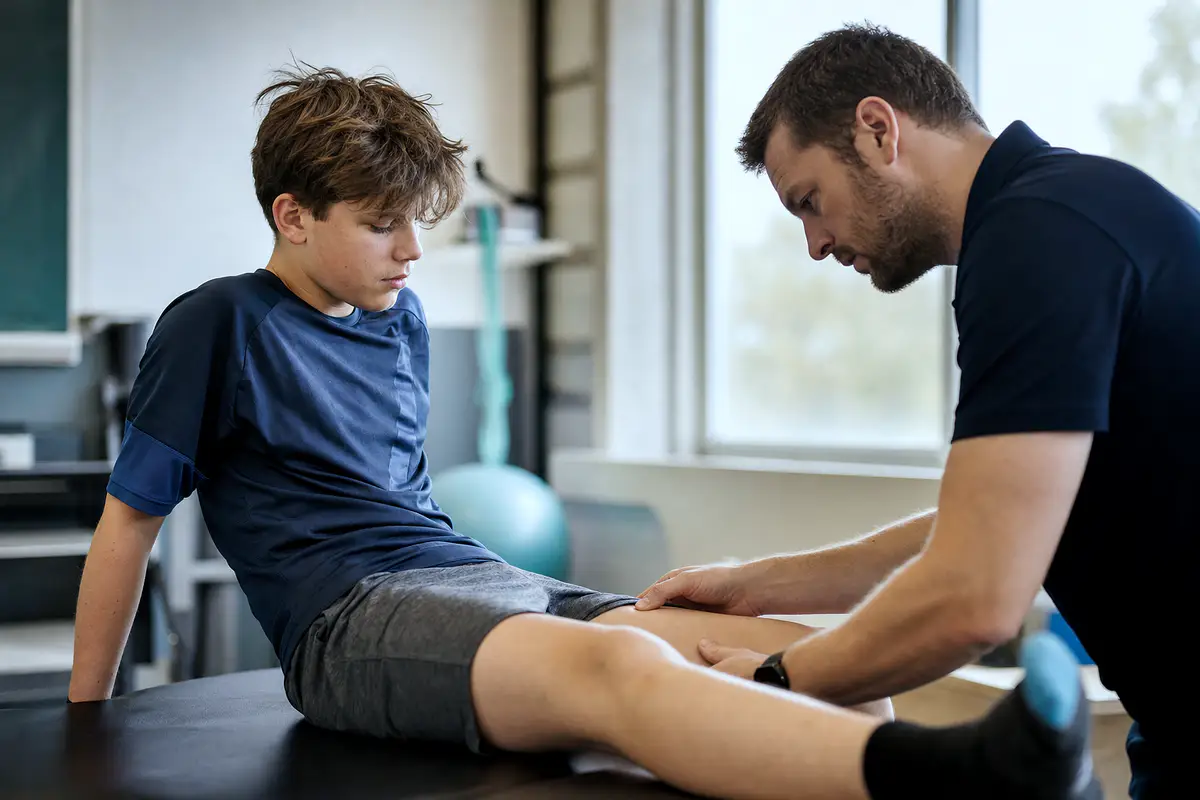
After a youth concussion, the road back to sport is not a straight line, and it shouldn't be rushed. As Dr. Shawn Sedgh, MD, the author of this article, explains, recovery works best as a series of gentle steps, each one building on the last, each one earned rather than scheduled.
The progression generally moves through stages. It starts with light aerobic activity, like walking or easy stationary cycling, just enough to get the heart rate up without triggering symptoms. If that goes well, the athlete moves to sport-specific drills, skating, dribbling, throwing, still without contact. Next comes non-contact practice with the team, then full-contact practice once cleared, and finally a return to game play.
Two ideas anchor the whole process. First, the athlete should be fully back at school before sport ramps up. Learning is the brain's day job; if a teenager can't sit through classes, concentrate, or tolerate a full school day, their brain isn't ready for the demands of a field or rink. Second, each stage should feel symptom-free before moving on. If headaches, dizziness, or fogginess return, that's a signal to step back and rest, not push through.
Here's the honest part: there is no universal calendar. A rigid day-by-day schedule can't account for how your child's brain actually responds. Some teens move quickly. Others need more time at one stage, or have to repeat a step. That's normal, not a setback.
This is why return to play belongs in the hands of a qualified clinician, a physician or trained provider who knows your child's history, can assess symptoms, and can decide when it's genuinely safe to advance. Parents and coaches play supporting roles, but the clearance decisions should come from someone with clinical training. Slow is not the enemy here. Pressure is.
Red flags, risks, and why returning too soon is dangerous
Most youth concussion recoveries are uneventful. But parents and coaches need to know when a bump on the head becomes an emergency, and why patience afterward matters so much.
Go to the emergency department right away if your child shows any of these after a head injury: a headache that keeps getting worse, repeated vomiting, increasing drowsiness or trouble staying awake, slurred speech, weakness or numbness, a seizure, or pupils that look unequal in size. These signs can point to bleeding or swelling in the brain, and they can't wait until morning.
The other danger is quieter. An adolescent brain that hasn't fully healed is vulnerable to second-impact syndrome, a rare but catastrophic swelling of the brain after a second hit, even a mild one. This is why "he seems fine" isn't enough. Symptoms can fade before the brain has actually recovered, and there is no sideline test that proves a young athlete is safe to absorb contact again.
Competitive pressure makes this harder. Playoffs, college recruiting, a starting spot, teens feel real urgency, and they often hide symptoms to protect it. Adults have to be the brakes. Returning before full recovery risks not just a second injury but longer symptoms overall, sometimes stretching into months that affect school, sleep, and mood.
Dr. Shawn Sedgh, MD emphasizes the sequence matters more than the speed: back to school first, then a gradual return to sport, with each step earned, not assumed. Skipping steps under pressure is the most common mistake families make, and the most preventable.
When in doubt, sit them out. The season will wait. Their brain won't recover on a deadline.
Working together: parents, teachers, coaches, and clinicians
A youth concussion touches every part of an adolescent's day, so recovery works best when the adults in their life talk to each other. Home, school, and sport each see a different side of the same child, and each side matters.
What to share. Parents should tell teachers about the diagnosis and any symptoms that affect learning, like headaches under bright lights or trouble concentrating by afternoon. A short note about the clinician's guidance helps schools offer reasonable adjustments, such as shortened assignments or breaks during testing. Coaches need to know too: the athlete should stay out of practices and games until cleared, and coaches can watch for symptoms that appear during exertion.
Early rest, then gradual steps. The first day or two usually involves relative rest, dialing back screens, homework, and physical effort, followed by a gradual return to activity as symptoms allow. Return to school generally comes before return to sport, and return to contact comes last, step by step. Dr. Shawn Sedgh, MD emphasizes that this progression should be individualized rather than copied from a generic schedule, since recovery timelines vary widely among adolescents.
Who oversees the plan. A clinician should guide the process and give written clearance before any contact or collision activity resumes. Symptoms that worsen despite adjustments, or that persist beyond the expected few weeks, are reasons to seek a specialist evaluation in pediatric neurology or sports concussion care. Asking early is never an overreaction.
Next step: getting the right support for your young athlete
The broad sequence after a youth concussion is well established: a brief period of relative rest in the first couple of days, then a gradual return to school before a stepwise return to sport. School comes first because learning is the priority, and sport should only progress once a young person is back at school without symptoms getting worse. As Dr. Shawn Sedgh, MD, explains in our full article, that sequence is a framework, not a stopwatch.
What matters most is who guides it. Online timelines can look precise, but no generic plan can account for your child's age, symptoms, school demands, or concussion history. A qualified clinician, ideally one experienced with adolescents in sport, should shape the steps and clear the return to play.
For parents and coaches, practical first actions are simple. Remove the athlete from play the same day a concussion is suspected. Watch for red flags like worsening headache, repeated vomiting, or unusual drowsiness, and seek urgent care if they appear. Tell the school early so teachers can adjust workload. Keep communication open with your child about how they actually feel.
If you're unsure where to start, explore the concussion resources at SimplyPedsNeuro or arrange a professional evaluation for guidance tailored to your athlete.