
Febrile seizures: what to do, and when to worry
Watching your child have a seizure is one of the most frightening things a parent can witness. If it happened alongside a fever, what you likely saw was a febrile…
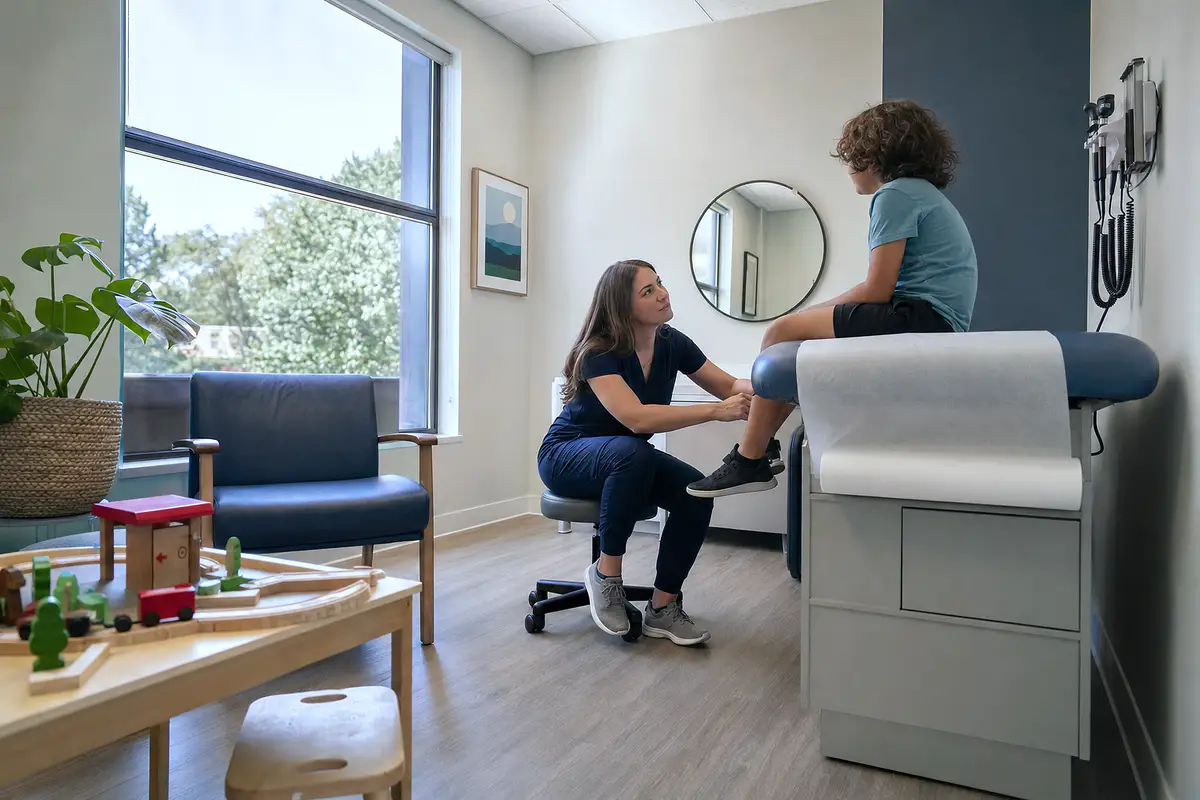
From your first visit request, you'll hear back directly, get a clear explanation of your child's symptoms, and sit down with Dr. Sedgh for an in-person evaluation.
Your child’s brain and nervous system, explained by a neurologist trained in pediatrics.

Plain-language guidance on the signs that warrant a specialist visit, from birth through age 18, written for parents.
Learn more
What febrile, absence, and convulsive seizures actually look like at different ages, and when to call 911.
Learn more
What a neurological evaluation contributes when a child can't focus, and what it honestly can't tell you.
Learn more
Milestones by age, the signs a delay needs evaluation, and when autism screening should involve a neurologist.
Learn more
What's common at each age, the red flags that need prompt care, and when a neurologist should take a look.
Learn more
Why new tics are common in young kids, what Tourette actually means, and when evaluation makes sense.
Learn more
What youth concussion looks like, how recovery actually works, and what return to school and play involve.
Learn moreA consultation is the starting point for every path. We'll listen first, then plan.
Book a pediatric neurology visitWhat you're seeing, a staring spell, a new tic, headaches that keep coming back, can feel frightening, and the same sign means different things at different ages: a staring episode at age 2 points somewhere very different than it does at age 12. SimplyPedsNeuro explains each sign in plain language with the age band stated, so you understand what may be happening in your child's brain and nervous system before you ever step into an office. When you're ready for answers in person, a visit request goes directly to Dr. Shawn Sedgh, MD, whose dual residency training in pediatrics and neurology covers children from birth through age 18.
Most of the signs that bring parents here, a staring spell, a new tic, headaches that keep coming back, turn out to be common and manageable, especially when we look at them through your child's specific age, since the same sign at age 2 means something different at age 12. That said, honest answers sometimes include uncertainty, and the right move isn't to guess from search results that swing between "totally normal" and "rare and serious", it's to get a clear explanation and, when warranted, an in-person evaluation. If you're unsure, that's exactly what Dr. Shawn Sedgh, MD is here for: his dual residency training in pediatrics and neurology covers birth through age 18, and you can request a visit to find out where your child's sign actually falls on that spectrum.
Start by writing down what you saw, what the sign looked like, when it happened, and your child's age, then call your pediatrician to share those details. If the sign keeps happening, is new and unexplained, or your gut says something isn't right, that's a reasonable time to see a neurologist, and you can request an in-person evaluation with Dr. Shawn Sedgh, MD, whose training covers children from birth through age 18. If your child has a seizure lasting more than five minutes, trouble breathing, or doesn't wake up normally, skip the waiting and call 911.
A neurologist is worth seeing when a sign is new, repeating, or changing, a staring spell that keeps happening, a tic that started suddenly, headaches that wake your child at night, or anything that looks different from how your child usually acts at their age (what's expected at age 3 can be a real concern at age 12). If you're unsure, your pediatrician is always a reasonable first stop, and it's never wrong to ask for a specialist's eyes on something that worries you. When you're ready, you can request an in-person evaluation with Dr. Shawn Sedgh, MD, whose dual residency training in pediatrics and neurology covers children from birth through age 18.
Watching your child have a seizure is one of the most frightening things a parent can witness. If it happened alongside a fever, what you likely saw was a febrile…
Maybe it started at a regular checkup, when your pediatrician paused a little longer than usual. Maybe a teacher mentioned that your child seems to lose focus mid-sentence, or you've…
If your child stares off into space a few times a day, you're probably not alone in wondering: is this just daydreaming, or something more? Absence seizures in children are…