
Is your child's development on track?
Milestones by age, the signs a delay needs evaluation, and when autism screening should involve a neurologist.
Milestones are a range. Losing a skill is a different question.
Every child develops on their own curve, but some markers matter at specific ages. By 12 months, most babies babble, point, and respond to their name. By 18 months, most use several words. By age 2, most combine two words and engage in pretend play. Missing these isn't proof of a problem, but losing skills your child once had, at any age, always warrants prompt evaluation.
Signs that deserve more than watchful waiting include no words by 16 months, no two-word phrases by age 2, limited eye contact or pointing in toddlers, and regression in language or social skills at any age. Pediatricians screen for autism at the 18- and 24-month visits; when screening raises concerns, or when a delay comes with other neurological signs, unusual movements, low muscle tone, possible seizures, a neurologist's evaluation adds a medical layer that behavioral screening alone can't provide.
Dr. Sedgh completed residency in both pediatrics and neurology and evaluates development from infancy through age 18. Earlier evaluation opens more doors for support, so if your gut says something is off, that instinct is worth acting on. You can request an in-person evaluation.

Bring the milestone, and the age
"Is this late?" depends on how many months old your child is, and on whether a skill appeared and then left.
- Words, pointing, or eye contact that other people have mentioned
- Walking, hand use, or play that seems behind friends of the same age
- A skill that was there and is now gone
- Hearing and vision checks already done
A single late milestone is often watched. Loss of a skill, or several areas moving slowly together, is a reason to ask sooner. Autism screening and a neurology visit are related, and they are not the same appointment.
Distinctions parents ask about
Late versus lost
A skill that has not arrived yet is not the same as a skill that went away.
One area or several
Speech alone, movement alone, or several areas together lead to different plans.
Screening is not the exam
A checklist can raise the question. The neurology visit is a history and an exam.
Age in months
For infants and toddlers, months matter more than a school grade or a round number.
What to expect.
Map the age
What your child does now, what same-age peers do, and what your pediatrician already checked.
Look for loss of skill
Words, social interest, or motor skills that disappeared are called out specifically.
Name the next step
Watch and recheck, or a neurological evaluation, or a therapist. The reason is explained in plain language.
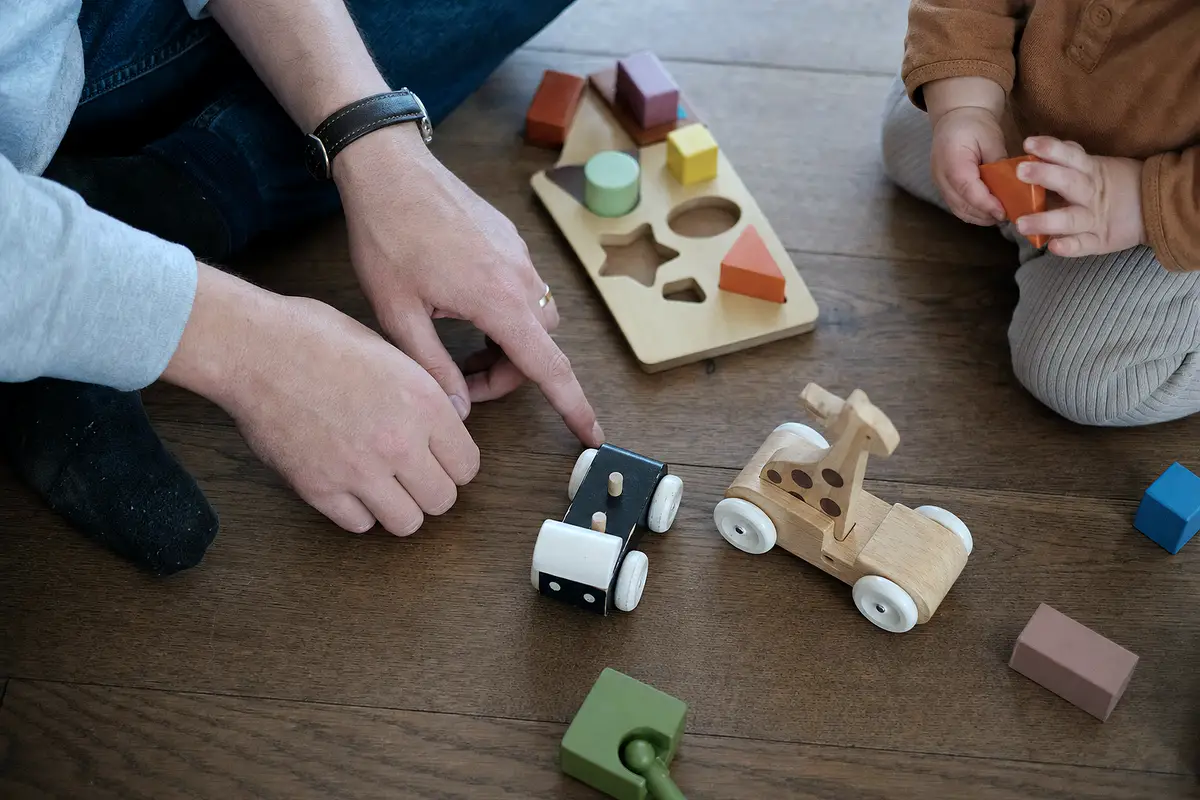
What Dr. Sedgh is looking for
The exam asks how your child moves, watches, and responds at this age, and whether the pattern fits a delay that should be watched or one that needs a closer neurological look. He will not invent a percent chance or a test your child does not need.
If speech, occupational therapy, or the pediatrician is the better next step, he will say that. Read how milestones are talked about with parents. No therapy schedule or diagnosis is promised on this page.
Frequently asked questions
What should I track before the visit?
The visit centers on your child's developmental history, milestones reached, lost, or skipped, plus observation and an age-appropriate neurological exam. Dr. Sedgh looks for medical contributors to delay, such as seizures or motor issues, alongside the developmental picture. He'll be straightforward about what can be concluded now and what needs time or further assessment.
Are therapy prices listed?
Costs depend on your insurance and on the scope of the evaluation. We don't publish fixed prices on patient pages, but the practice can talk through fees with you when you request a visit.
Will one visit answer this?
A first evaluation fits in one visit, but developmental questions are rarely answered in a single snapshot, tracking progress over time is often part of the plan. If your child has lost skills they previously had, say so when you request the visit, since regression warrants timely attention.
Is a late talker always a neurology problem?
No. Many children are late in one area and catch up. The reasons to ask a neurologist include several areas moving slowly, any loss of a skill, or a pediatrician who wants a neurological exam.
Is this an autism diagnosis?
No. This page is not a screening result. Autism evaluation and a pediatric neurology visit can overlap, and they are not the same thing. Dr. Sedgh will say if a different evaluation is the right next step.