
The information in this article is for educational purposes only and does not constitute medical advice. Always consult your child’s doctor before making any health decisions. If your child is having a medical emergency, difficulty breathing, a seizure lasting more than 5 minutes, unresponsiveness, call 911 immediately.
Developmental milestones are the general markers that show how a child is growing, things like rolling over, babbling, pointing, and playing with others. They track progress in three broad areas: movement, communication, and social skills.
Here's the reassuring part: milestones are ranges, not rigid deadlines. A baby who walks at ten months and one who walks at fourteen months are both typically doing just fine. What matters most is steady progress over time, not hitting a specific skill on a specific birthday.
Still, some patterns deserve a closer look. Certain delays or lost skills can signal that a child would benefit from a pediatric neurology evaluation, and knowing which signs matter can make a real difference in getting support early. This is especially relevant when questions arise about Autism and development.
At SimplyPedsNeuro, Dr. Shawn Sedgh, MD approaches these concerns with clarity and care, no panic, no guesswork. In the sections ahead, we'll walk through the specific red flags worth watching, the ages when they matter most, and exactly when it's time to schedule an evaluation.
The four domains of infant and toddler development
When pediatricians talk about developmental milestones, they're looking at four areas. According to Dr. Shawn Sedgh, MD, these domains help families and clinicians see the whole picture of a child's growth rather than a single skill.
Gross motor covers big body movements. Examples include rolling over, sitting without support, crawling, pulling to stand, and walking. These skills tend to follow a fairly predictable order, even if the timing varies by several months.
Fine motor involves the hands and fingers. Think reaching for a toy, grasping a rattle, transferring objects between hands, and later stacking blocks or turning pages.
Language includes both understanding and expression. Early signs look like cooing, babbling, and responding to a name. First words typically emerge around the first birthday, followed by two-word combinations in the second year.
Social-emotional development shows up in smiling back at a caregiver, pointing to share interest, waving, and eventually pretend play like feeding a doll.
Children often move at different rates across these domains. A toddler who walks early might talk later; that's common and usually not concerning. What deserves evaluation is a stalled or lost skill, a lack of pointing or eye contact, no words by about 16 months, or no two-word phrases by age two. These patterns can sometimes relate to conditions such as Autism, hearing loss, or motor disorders. A neurologist can assess the cause and guide next steps, without assuming the worst or promising a particular path.
Milestones by age band: a general guide from birth to age three
Milestones are guideposts, not deadlines. Children reach skills in their own time, and a few weeks or months of difference is usually normal. This general guide from Dr. Shawn Sedgh, MD, describes what most children do in broad terms. Your pediatrician tracks development at well-child visits and can tell you whether a concern is worth a closer look.
0, 6 months. Babies begin lifting their heads, tracking faces and objects, cooing, and smiling socially. Many start rolling over toward the end of this window. What matters most is steady progress and responsiveness to voices and faces.
6, 12 months. Most babies sit without support, babble with varied sounds, reach and transfer objects between hands, and pull toward standing. Some crawl early; others scoot or skip crawling entirely. Stranger wariness and early games like peekaboo are common social signs.
12, 24 months. Walking, first words, and pointing to share interest tend to emerge here. Toddlers stack blocks, follow simple directions, and imitate everyday actions. Vocabulary growth varies widely in this band, which is why regular checkups matter.
24, 36 months. Many children combine words into short phrases, run and climb with more confidence, kick a ball, and engage in pretend play. They begin showing interest in other children, though parallel play is still typical.
When to see a neurologist. Talk with your pediatrician if your child loses skills they once had, shows little eye contact or response to their name by around 12 months, isn't walking by 18 months, or has very few words by age two. Some of these patterns can be early signs of Autism or other conditions affecting development. An evaluation doesn't mean something is seriously wrong, it means getting answers sooner, when support helps most. If your pediatrician shares your concern, a pediatric neurologist can assess your child and guide next steps. Trust your instincts; parents often notice first.
Red flags: when a delay should be evaluated by a neurologist
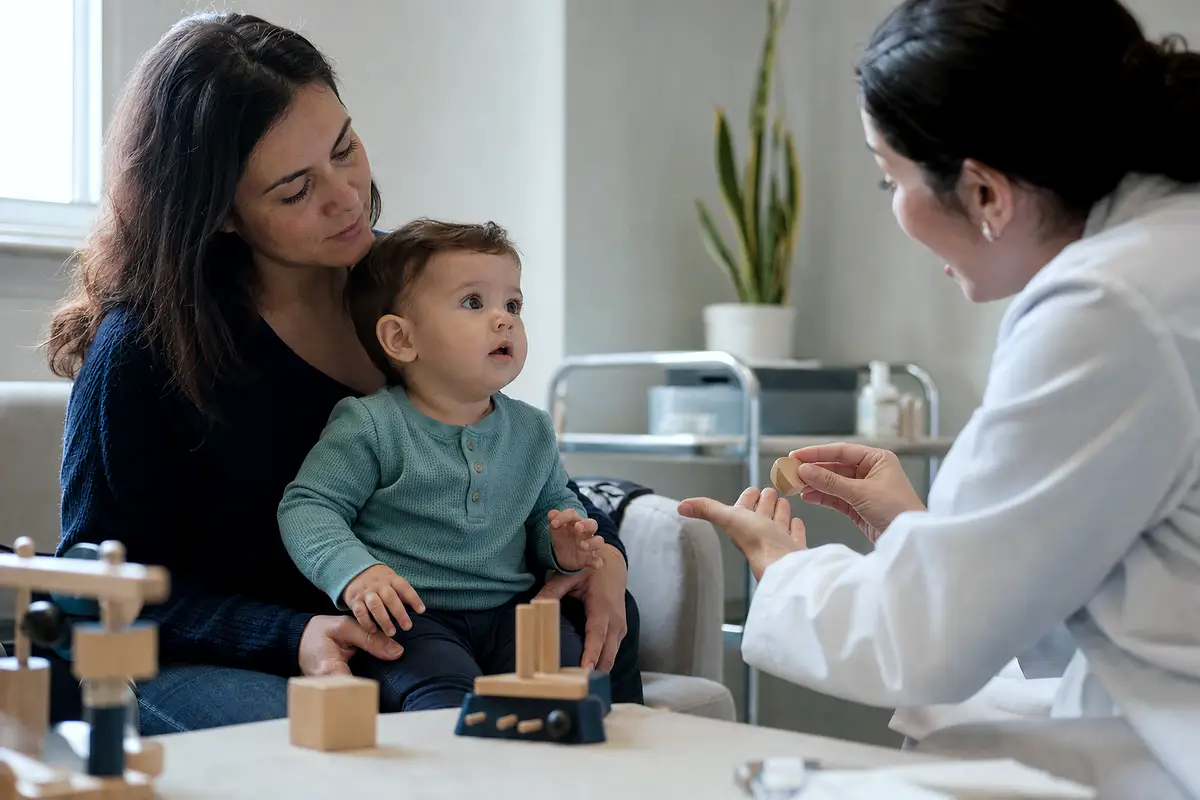
Most parents notice when something feels off long before they can name it. Trust that instinct. While many milestone variations are normal, certain signs deserve a prompt look from a pediatric neurologist, and Dr. Shawn Sedgh, MD encourages families to raise concerns early rather than wait.
Watch for these concrete warning signs:
- Loss of previously acquired skills. A child who once waved, said words, or sat independently and then stops needs evaluation. Regression is never something to "wait out."
- Persistent muscle tone concerns. A baby who feels unusually floppy when held, or one whose limbs seem stiff and hard to move, may have an underlying neurologic issue.
- Absent babbling or gestures. By around 9 to 12 months, most babies babble and use gestures like reaching or waving. Silence here is worth discussing.
- Seizures or repeated staring episodes. Brief spells where a child seems to "check out," especially with eye fluttering or unresponsiveness, should always be checked.
- No pointing or response to name. By about 12 to 18 months, most toddlers point to share interest and turn when called. Missing these can be an early sign of Autism, among other possibilities.
- Any loss of skills, at any age. This one bears repeating.
Why does regression matter so much? A child who is simply late may still be building skills on their own timeline. But a child who *loses* abilities is moving backward, and that pattern can point to conditions where early treatment changes the course of development. Waiting rarely adds information; an evaluation almost always does.
None of these signs confirm a diagnosis on their own. They are reasons to ask, not reasons to panic. If one or more sound familiar, bring your concerns to your pediatrician and request a neurologic evaluation. Early answers, whatever they show, give your child the best chance to get the right support at the right time.
How to talk to your pediatrician about your concerns
You know your baby or toddler best. If something about their development feels off, say so at the well visit, you don't need to wait for the doctor to notice first. Bring a short list of what you see at home: whether your child responds to their name, makes eye contact, babbles, points, or uses words by the ages those skills typically appear.
Videos help. A ten-second clip of a behavior you can't quite describe gives your pediatrician real information. Notes on your phone about when you first noticed something matter too, because timing shapes next steps.
You can ask directly: "Should we see a neurologist about this?" That's a fair question, not an overreaction. Concerns about delays, including questions about Autism, deserve a careful look rather than a wait-and-see shrug. Dr. Shawn Sedgh, MD emphasizes that parents raising concerns early is exactly what those visits are for.
Asking for an evaluation doesn't commit you to anything. It's not a diagnosis; it's a closer look, and often it brings reassurance. If it does point to something, earlier answers give your child more options. Trust your instincts. If you leave an appointment still worried, say so again.
What to expect at a pediatric neurology visit
A first visit can feel big, but the appointment itself is usually calm and unhurried. According to Dr. Shawn Sedgh, MD, the goal is understanding your child's development, not rushing to a label.
The visit typically starts with a detailed developmental history. You'll be asked when your baby first smiled, sat, walked, and said words, plus questions about pregnancy, birth, and family history. Bring notes, old photos, or videos of the behavior that concerns you; those help more than you'd think.
Next comes observation. The neurologist watches how your child plays, moves, and responds, often while your child simply does what feels natural. This part looks a lot like playtime, and that's the point.
Then there's a gentle neurological exam: checking reflexes, muscle tone, coordination, eye movements, and how your child follows simple directions. Nothing here should hurt, and most toddlers tolerate it well.
Afterward, the doctor may suggest follow-ups. Depending on what was seen, that could mean a hearing test, a speech or language evaluation, physical or occupational therapy, or occasionally imaging or lab work. These are described in general terms at the visit, and referrals can take time to schedule.
Sometimes concerns point toward a specific area, such as Autism or a motor delay, but often the answer is "let's watch and recheck." Milestones have normal ranges, and many late bloomers catch up. If you leave with questions, ask them, a good neurologist expects that and welcomes it.
Reassurance for worried parents: evaluation helps either way
If you're lying awake wondering whether your toddler should be saying more words by 18 months, or why your baby isn't babbling the way the books describe, that worry deserves respect, not dismissal. Asking questions about your child's development is not overreacting. It's an act of care, and it puts you in a stronger position no matter what comes next.
Here's the honest part: concerns about developmental milestones sometimes point to a condition that benefits from early support, such as Autism. Just as often, they lead to something simpler, a plan to watch and wait, speech therapy, or early intervention services that many children respond to well. Either way, an evaluation moves your family forward. Waiting and wondering does not.
Dr. Shawn Sedgh emphasizes that early evaluation is useful precisely because it works in both directions. If your child needs support, starting sooner generally opens more doors than starting later. If the evaluation shows your child is simply on their own timeline, you get something parents crave: clear information from someone who has actually examined your child, instead of late-night internet spirals.
No one can promise you a specific result, and you should be wary of anyone who does. What we can say is this, children who get evaluated early tend to get help earlier when they need it. Bringing your concerns to a neurologist is never the wrong call.
Next step: getting answers for your child
Here's what matters most. Know the general milestones for your child's age, babbling by about 12 months, first words around 15 months, walking by 18 months, two-word phrases by age 2. Watch for red flags: losing skills they once had, limited eye contact or pointing, no response to their name by 12 months, or not walking by 18 months.
If you notice any of these, start with your pediatrician. Concerns about speech, social connection, or behavior sometimes point toward Autism or another developmental difference, and an early evaluation gives you the clearest picture of your child's development.
As Dr. Shawn Sedgh, MD explains, specialists don't expect parents to arrive with answers, bringing your observations is enough. A neurology evaluation simply helps your family understand what's going on and what support might help.
When you're ready, SimplyPedsNeuro is here as a supportive next step. Scheduling a consultation is easy, and there's no pressure, just a conversation about your child and your concerns.
Trust what you're seeing. Asking questions is exactly what a good parent does.