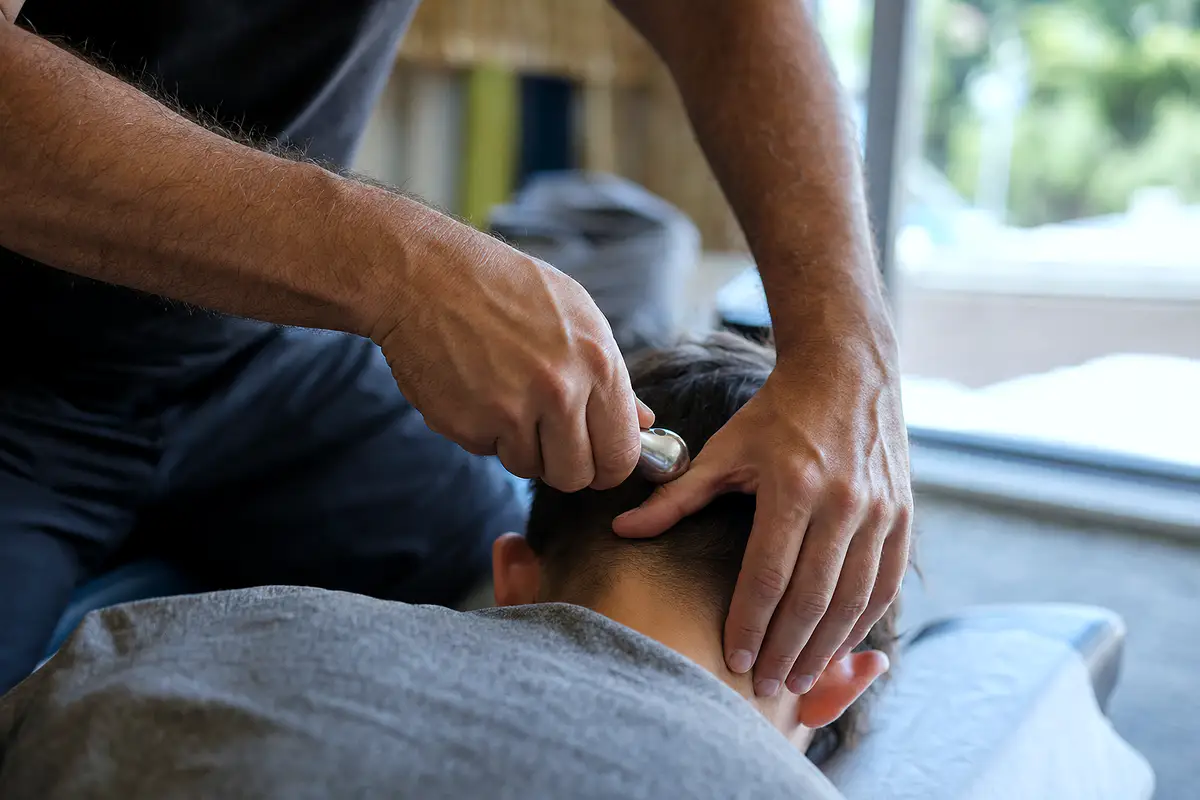
Youth Concussion Care in Los Angeles: Clear Answers for Worried Parents
If your child hit their head, whether a toddler's fall at the playground or a teen's sports collision, we'll help you understand what's normal, what's not, and when to come in.
Greater Los Angeles
By appointment
Youth concussion in Los Angeles
If your child took a hit at a soccer game in the Valley, a fall at a skate park in Santa Monica, or a collision during school PE, and now something seems off, a headache that won't quit, trouble focusing in class, dizziness, or sleeping far more or less than usual, you are right to pay attention. A concussion is a brain injury, and the signs look different depending on age. A 4-year-old may not have the words to say "my head hurts" and instead becomes clingy, irritable, or loses interest in play. A 14-year-old may downplay symptoms to get back on the field, while parents notice slipping grades, light sensitivity, or a shorter fuse. Families across Greater Los Angeles, from Pasadena to Long Beach, from the Westside to the Inland communities we already serve, bring us these exact worries every week, often after a school nurse or coach has flagged a possible head impact.
Here is the honest calibration: most concussions in children and teens heal well with proper rest and a gradual, supervised return to school and sports. But some don't, and it's genuinely hard to tell early on which path your child is on. Warning signs that need urgent same-day care include repeated vomiting, worsening headache, confusion, slurred speech, unequal pupils, or any loss of consciousness that concerns you. Symptoms that linger past two to four weeks, persistent headaches, mood changes, trouble concentrating, deserve more than a wait-and-see approach. That gray zone is exactly where parents in Los Angeles get stuck: the emergency room says "probably fine," the internet says everything from "totally normal" to "permanent damage," and nobody tells you what to watch for at your child's specific age.
Your next step is straightforward. Keep your child out of sports and rough play until cleared, limit but don't eliminate screen time, and keep a simple daily note of symptoms. If symptoms persist, are getting worse, or you simply want a clear expert read on what you're seeing, that's when a neurologist evaluation makes sense, especially one who understands both the developing brain and the developing child. Dr. Shawn Sedgh, MD completed three years of residency in pediatrics and three years in neurology, and evaluates children from birth through age 18. When you request a visit, it goes directly to Dr. Sedgh, and he'll walk you through what your child's symptoms mean at their age, in plain language, so you leave knowing what is happening and what to do next.
After a sports injury in Greater Los Angeles
Bring the coach's account if you have it, and your own notes from the days since. The visit is in person. Emergency signs above still go to the emergency department, not to a request form.
School workload and sleep are part of the story. They are not a published return-to-play schedule.
Why choose us
Dr. Shawn Sedgh, MD completed residency training in pediatrics (3 years) and neurology (3 years).
Dr. Shawn Sedgh, MD completed residency training in pediatrics (3 years) and neurology (3 years).
Explanations are written for the parent, with the age band stated when a sign is described.
Explanations are written for the parent, with the age band stated when a sign is described.
No medication doses are published on patient pages.
No medication doses are published on patient pages.
A visit request goes to Dr. Shawn Sedgh, MD. Practice address and phone are not published until he confirms them.
A visit request goes to Dr. Shawn Sedgh, MD. Practice address and phone are not published until he confirms them.
What to expect.
Emergency signs leave the house
Worsening pain, repeated vomiting, seizure, unequal pupils, or trouble waking go to emergency care.
A short recovery log
Symptoms, school, and sleep for the days after the hit. Bring it to the visit.
Exam, then a decision about play
Return to school and return to sport are separate decisions for this child. No fixed day count is published here.
What clearance means here
Clearance, if it is given, is based on how this child is recovering and what the exam shows. It is not copied from a poster. If it is too soon, Dr. Sedgh will say what still needs to settle before play is reasonable.
Frequently asked questions
Do you offer Youth concussion across Greater Los Angeles?
Yes, we evaluate youth concussions for children and teens from birth through age 18 across Greater Los Angeles, with every visit request going directly to Dr. Shawn Sedgh, MD, whose dual residency training in pediatrics and neurology means he understands both the developing brain and the child in front of him. Whether your child had a sports collision, a fall, or symptoms that showed up days later like headaches, trouble concentrating, or sleep changes at age 7 versus age 15, we can help you understand what's normal recovery and what's not. To arrange an in-person evaluation, just submit a visit request and we'll follow up with the practice address and phone once Dr. Sedgh confirms them.
What makes your Youth concussion in Los Angeles different?
Most concussion advice online is written for adults or for clinicians, ours is written for you as a parent, and every explanation names the age band it applies to, because a concussion at age 6 looks different than at age 14. And when reading isn't enough, your visit request goes directly to Dr. Shawn Sedgh, MD, whose six years of residency training in both pediatrics and neurology mean your child is evaluated by someone who understands the developing brain specifically, not a scaled-down version of an adult exam. You'll get an honest read on how worried to be and a concrete next step, not just generic "watch and wait" instructions.
How many days should my child stay out of sports?
This site does not publish a fixed number of rest days. Return to play depends on how your child is recovering and on the exam. A worsening course is a reason for urgent care, not for waiting out a calendar.
Does every concussion need a scan?
No. Many are followed with history and exam. A scan is considered when the story or the exam has a warning sign, including worsening symptoms, a seizure, or findings that do not fit an ordinary course.